 Florentis
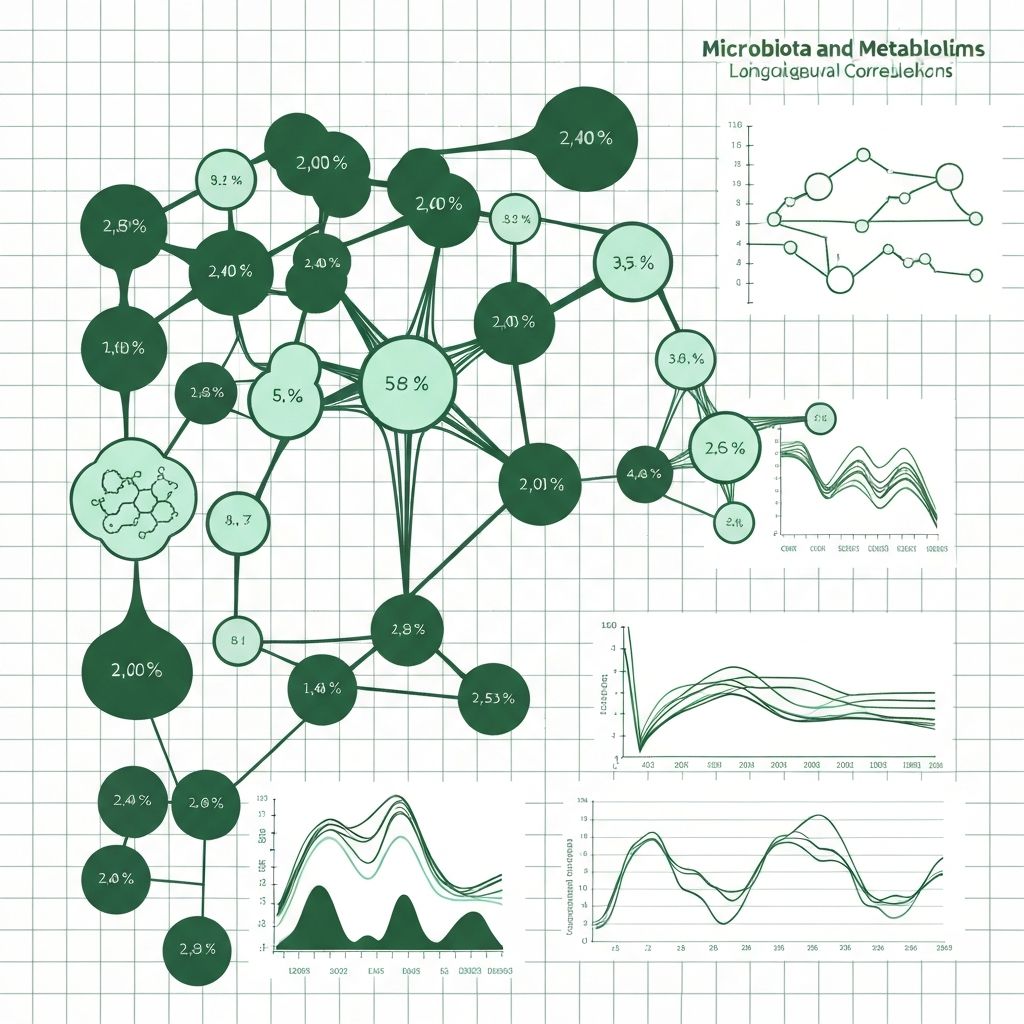
Longitudinal Studies on Microbiota and Body Weight Changes
Whilst cross-sectional studies establish correlations between microbiota composition and body weight status, they cannot determine causality or directionality. Longitudinal investigations tracking microbiota changes over time during weight loss, weight gain, or metabolic transitions provide temporal evidence distinguishing whether microbiota changes precede or follow weight changes, and whether microbiota alterations predict subsequent weight dynamics.
Microbiota Changes During Weight Loss Interventions
Weight loss interventions—including dietary restriction, exercise, bariatric surgery, and pharmacological interventions—consistently produce measurable shifts in microbiota composition. These changes occur rapidly, often within weeks of intervention onset, and are frequently accompanied by increases in bacterial diversity and restoration of SCFA-producing-bacteria abundance.
Dietary restriction promotes elevated abundance of beneficial bacteria including Akkermansia, Faecalibacterium, and Roseburia spp. These organisms are typically depleted in obese dysbiosis but are restored during weight loss. Weight loss is also accompanied by decreased abundance of certain Proteobacteria and increased microbial richness compared to pre-intervention baseline.
Bariatric surgery (gastric bypass, sleeve gastrectomy) produces dramatic microbiota shifts, including rapid Firmicutes depletion and Bacteroidetes expansion in some individuals. These surgical-induced microbiota changes correlate temporally with rapid weight loss and metabolic improvements.
Microbiota as Weight Loss Predictors
Several prospective studies have investigated whether baseline microbiota composition predicts weight loss success following dietary intervention. Some studies report that individuals harbouring specific bacterial taxa at baseline (e.g., higher Akkermansia or Faecalibacterium) experience greater weight loss than those lacking these bacteria. Other studies report that baseline bacterial richness or diversity predicts weight loss outcomes.
However, these associations are inconsistently replicated across studies, with effect sizes ranging from modest to non-significant. The heterogeneity in findings likely reflects differences in population demographics, intervention protocols, analytical methods, and confounding by unmeasured variables (such as dietary adherence or physical activity patterns).
Current evidence does not support robust microbiota-based prediction of weight loss outcomes. Microbiota composition may influence weight loss resistance or facilitation in some individuals, but it is neither necessary nor sufficient to predict weight loss success.
Microbiota Changes During Weight Gain and Obesity Development
Longitudinal studies following initially lean individuals during periods of positive energy balance and weight gain reveal microbiota compositional changes preceding or accompanying weight gain. Increases in body weight are often associated with decreased bacterial diversity, altered Firmicutes/Bacteroidetes ratios, and reduced abundance of SCFA-producing bacteria.
The temporal relationship—whether microbiota changes drive weight gain or weight gain drives microbiota change—remains ambiguous in most studies. However, experimental evidence from animal models demonstrates that dysbiotic microbiota can directly promote weight gain when transplanted into germ-free or antibiotic-depleted hosts, suggesting causality in at least some contexts.
Microbiota Plasticity and Reversibility
Longitudinal studies demonstrate substantial microbiota plasticity. Microbiota composition rapidly changes in response to dietary interventions, with some changes manifesting within days and substantial stabilisation within weeks to months. Importantly, these changes are partially reversible; microbiota composition reverts towards baseline upon cessation of dietary interventions.
This plasticity has important implications for obesity treatment. If dysbiotic microbiota contribute causally to weight gain, restoration of eubiotic microbiota composition through dietary or pharmacological means might theoretically facilitate weight loss. However, the modest effect sizes of microbiota-targeted interventions to date suggest that microbiota composition, whilst important, is not the primary determinant of weight dynamics.
Temporal Dynamics and Treatment Response
Some prospective studies have tracked microbiota trajectories during extended weight loss interventions, documenting that continued microbiota shifts correlate with sustained weight loss. Individuals achieving rapid initial weight loss often exhibit rapid microbiota shifts; those with slower weight loss trajectories exhibit more gradual microbiota changes.
This temporal correlation is consistent with bidirectional causality: sustained weight loss drives continued microbiota change through altered diet and intestinal physiology, whilst simultaneously, microbiota changes (increased SCFA production, improved barrier function) may facilitate continued weight loss through mechanisms discussed previously.
Microbiota Stability and Long-Term Weight Maintenance
A critical question in obesity treatment concerns long-term weight maintenance. Few longitudinal studies extend beyond 12–24 months, limiting evidence regarding whether microbiota composition predicts long-term weight stability. Preliminary data suggest that individuals successfully maintaining weight loss harbour microbiota compositions distinct from weight-regain individuals, though causality remains unresolved.
Weight cycling (repeated weight loss and regain) is associated with progressive microbiota dysbiosis in some studies, suggesting that microbiota may be adversely affected by repeated energy restriction and refeeding cycles. However, large-scale prospective studies quantifying these long-term effects are limited.
Confounding and Alternative Explanations
Longitudinal studies of weight change and microbiota dynamics face substantial confounding. Weight loss interventions typically involve multiple simultaneous changes: altered dietary composition (often increased fibre and decreased simple carbohydrates), physical activity changes, and potentially pharmacological interventions. Each of these factors independently influences microbiota composition.
Disentangling microbiota-driven weight loss from diet-driven weight loss that secondarily alters the microbiota is methodologically challenging. Most longitudinal studies cannot isolate microbiota effects from these confounders.
Heterogeneity and Population-Specific Findings
Substantial interindividual heterogeneity characterises microbiota responses to weight loss interventions. Some individuals exhibit rapid, substantial microbiota shifts; others show minimal changes despite similar weight loss. This heterogeneity may reflect genetic variation, baseline microbiota composition, diet composition, or other unmeasured factors.
This heterogeneity, combined with inconsistencies across studies, suggests that microbiota-weight relationships are modulated by population and individual-level factors, limiting generalisation of findings across populations.
Implications and Future Directions
Longitudinal studies provide temporal evidence supporting bidirectional relationships between microbiota and body weight. Weight loss is consistently accompanied by microbiota shifts towards eubiotic composition, suggesting that restoration of beneficial microbiota is part of the physiological response to weight loss. Whether this microbiota restoration facilitates continued weight loss or is merely an epiphenomenon of weight loss-driven dietary and metabolic changes remains incompletely resolved.
Prospective studies with longer follow-up periods (≥24 months), careful control of dietary and lifestyle confounders, and objective microbiota functional assessments would substantially advance understanding of microbiota-weight relationships and inform evidence-based approaches to obesity treatment.